Archives

Tagged ‘toronto market update‘

Green Condo Checklist

Green Condo Checklist

What is LEED?

The Leadership in Energy and Environmental Design (LEED) rating system promotes an integrated building design approach grounded in five key LEED® categories: Sustainable Sites, Water Efficiency, Energy and Atmosphere, Materials and Resources, and Indoor Environmental Quality. Initially created by the US Green Building Council (USGBC), the Canada Green Building Council (CaGBC) has since modified the rating system to suit the specific concerns and requirements of buildings in Canada. LEED® is flexible enough to accommodate a wide range of green building strategies that best fit the constraints and goals of particular projects. For more information about LEED® programs in Canada, please visit  http://www.cagbc.org/leed/what/

Buying a Green Condo Checklist

General:

  • Look for recognized green building standards like LEED or BOMA BESt to ensure your condo is built according to verifiable sustainability standards.
  • Are water, electric and gas use individually metered? This results in dramatically increased self-imposed conservation in condo units when compared to common shared heating, electric and gas. Insist on a programmable thermostat and turn it down in the winter and up in the summer.

 Location

  • Is the condo located in close proximity to your place of work? can you walk to work? Is it near public transit? Is the neighborhood cyclist and pedestrian friendly?
  • Does the property include a variety of permeable surface areas like garden, lawn and water features?
  • Does the building include a green roof?

 Water and Energy

  • Are plumbing fixtures water-efficient?
  • Does the condo support the use of renewable energy sources such as wind, solar and geothermal?
  • Are lighting fixtures energy efficient and using compact fluorescent (CFL) or LED bulbs?
  • Is waste-water or run-off water harvested and reused for non-potable uses? Is the outdoor environment landscaped to efficiently use irrigation water?
  • Does the condo support the use of renewable energy sources such as wind, solar and geothermal?
  • Are lighting fixtures energy-efficient and using compact fluorescent (CFL) or LED bulbs?
  • Is waste-water or run-off water harvested and reused for non-potable uses? Is the outdoor environment landscaped to efficiently use irrigation water?
  • Are the included standard fixtures Energy Star® compliant? Are there incentives offered by the condo to purchase high-efficiency appliances?
  • Does the condo incorporate high efficiency windows and doors and are effective blinds pre-installed? Are they properly placed in the design of the condo unit?
  • What ratio of the outside walls are windows? In most buildings, 40% window to 60% wall provides the best balance of insulation and daylight and views.

Sustainable Materials

  • Are the materials used in construction or finishing of the condo such as cabinets, floors and furniture made from renewable resources? Do they have a high recycled content? Have the products been sourced locally?

Indoor Environmental Quality

  • Are the flooring, paint and other finishes non toxic with low volatile organic compounds (VOCs)?
  • How is fresh air delivered to the suites? Is it delivered from the corridor under the doors of the suite, or is it ducted separately to each suite to minimize the risk of odour transfer?
  • Is energy recovered from the air exhausted from the suites (usually bathroom exhaust) before it is released outdoors? This is typically done in a dedicated suite heat recovery ventilator (HRV), or in a central energy recovery ventilator (ERV).

Green Condo Map

http://www.cagbctoronto.org/tools-resources/green-building-map

Greening Your Existing Condo

  • Where possible, replace existing light fixtures and bulbs with modern and energy efficient compact fluorescent (CFL) and LED bulbs to reap significant energy savings
  • Install Energy Star® lighting fixtures and appliances where possible
  •  Turn down your water heater to a reasonable temperature. Do you need near-boiling water on demand at all times?
  •  Install ceiling fans to circulate cool or warm air throughout your condo space. This can be particularly effective within new “loft style” condos with high ceilings.
  •  Use high efficiency LED lighting during the holidays and turn them off when you’re not enjoying them
  •  Use a programmable thermostat to reduce energy costs when you are away or at night when you are sleeping
  • Repair plumbing leaks and conserve water by selecting water-efficient plumbing products like faucets, shower heads and toilets and use less water when possible
  •  Choose natural or sustainable flooring products like FSC certified hardwood floors and non-off-gassing carpeting made from sustainable materials
  •  Institute waste reduction and recycling programs to reduce the costs associated with waste disposal and help to reduce overall waste to landfill
  •  Start a ‘Green Best Practices Committee’ to help your condo corporation and board focus on the greening of the common areas of your condominium

Provided by the Canada Green Building Council

About the Canada Green Building Council – Greater Toronto Chapter

The Canada Green Building Council (CaGBC) is a non-profit national organization formed to accelerate the design and construction of green buildings in Canada. The Council’s objective is to work with its partners in government and the private sector to accelerate the “mainstream adoption of green building principles, policies, practices, standards and tools.”

The Canada Green Building Council – Greater Toronto Chapter (CaGBC-GTC) was the first Chapter of the Canada Green Building Council. It is comprised of leading individuals from government, the building industry, suppliers and professionals, altogether representing the various segments of the design and building industry.

Together, the CaGBC and the Greater Toronto Chapter symbolize the broad interests that are necessary to come together and motivate change in the built environment.
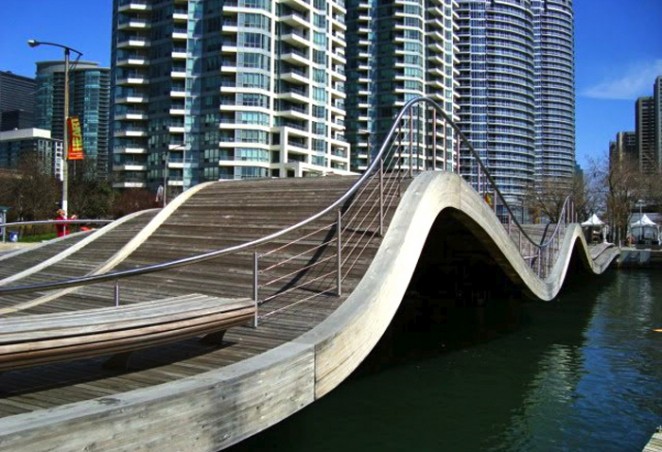
Toronto Real Estate Market Update October 2013

October marked the fifth consecutive month in which reported sales of residential properties have outpaced the same month in 2013. Since June the greater Toronto market place has produced 31,049 property sales. During the same period last year only 25,987 properties were reported sold. This represents an increase of over 5000 property sales or 19.2 percent. October’s results were a carbon copy of this 4 month period. 8000 properties were reported sold. An increase of 19.2 percent compared to the 6,713 properties reported sold in October 2012. October’s results clearly have dispelled any notion that the recent increase in sales activity in the greater Toronto area was an aberration.

Previous market updates posited that the recent increase in sales activity may have been due to a perceived fear that mortgage interest rates were climbing higher. Increases in interest rates combined with the rising average sale price for Toronto properties would make home ownership unaffordable for a large number of potential buyers, in particular first time buyers. During the month of October mortgage interest rates actually came down. Five year fixed rates at 3.49 percent are now available. Since rates are not now anticipated to increase anytime soon, Toronto’s strong resale market is not likely to abate and will continue into 2014. The increasing cost of purchasing a house in Toronto and perhaps the intervention of the Federal Minister of Finance are the only factors likely to curb the current strong market.

Adding to these strong market conditions is the lack of available properties for sale. In October 13,110 new listings were delivered to the resale market place. This is a decline of 4.2 percent compared to the 13,685 delivered in 2012. Heading into November only 18,557 properties were available to buyers in the greater Toronto area. Last year there were 20,737, a decline of 10.5 percent. Interestingly sales of semi-detached homes declined by 2.4 percent in the Toronto market place. This decline was not due to demand, but to supply. This is reflected by the fact that in October the average sale price for semi-detached house sales in Toronto increased by 11.7 percent, almost the equivalent of the increase in the average sale price of detached homes (12.4 percent).

May of this year established the highest average sold price in the greater Toronto area at $ 540,544. October came very close to matching that achievement. The average sale price for all properties sold was $539,058, a 7.4 percent increase compared to the average sale price of $502,127 produced in October 2012. The average sale price for detached homes in the City of Toronto came in at $873,509. Semi-detached homes were a little less expensive at $642,112. Unfortunately there is not much supply for buyers to choose in the case of semi-detached homes. In Toronto’s central core area the cost of a detached house was $1,369,135, this is slightly off from the $1,397,683 it cost to by a similar type house in September.

Generally high end, luxury home sales (properties having a sale price of $ 1 Million or more) continued the improvement witnessed in September. In October 550 properties were reported sold in this category. This compares very favourably to the 378 sold in October 2012, and the 371 sold in October 2011. An increase of approximately 50 percent. 90 of these high end sales exceeded $ 2 Million. 8 of these 90 reported sales were condominium apartments, the rest were detached homes. No semi-detached property sales exceeded $ 2 Million.

Condominium apartment sales have continued to do well in the second half of 2013. In October condominium apartment sales exceeded the results of the overall market. Sales increased by 20.4 percent in the City of Toronto compared to last year. The increase in sales was accompanied by an increase in average sale prices. In October the average sale price of a condominium apartment was $ 384,441, an increase of 7.2 percent. Notwithstanding the improvement in condominium sales, they still take longer to sell than other types of properties, averaging 33 days in the in the City of Toronto. Overall sales in the greater Toronto market place (including condominium apartments) were achieved in 27 days. Sales were much faster for various housing types and various areas of the City. For example sales of semi-detached homes in the eastern trading districts took place in only 13 days. Sales of these types of homes were even faster in the central districts, coming in at an astounding 12 days. Condominium apartment sales brought the overall average for days-on-market to 27 days.

Looking forward more of the same can be expected in November and December, with of course, the seasonal adjustment coming to play. There is simply no economic change that is anticipated that might cause the current market conditions to change.

Prepared by Chris Kapches, Chestnut Park Real Estate Limited, Brokerage

Green Home Checklist

Buying a New Home?

What to look for when selecting your new house

Genreal

  • If it is a newly constructed home, look for recognized green building labels like LEED® for homes, Energystar, Energuide, GreenHouse Certified Construction or R-2000 to ensure the house was built to perform above and beyond building code requirements.
  • If buying an existing home, request an energy audit by a certified evaluator.
  • How big is the house? The best green homes have just enough space and no more!

 Location

  • Look for houses located in communities that offer many amenities at your doorstep. You will save money, gas and time.
  • Is the house located in close proximity to your place of work? Can you walk to work? Is it near public transit? Is the neighbourhood cyclist and pedestrian friendly?

Water

  • Are plumbing fixtures water-efficient? Does it have low volume or dual flush toilets?
  • Does the house have a tankless water heater solution?
  • Is waste-water or run-off water harvested and reused for non-potable uses? Is the outdoor environment landscaped to efficiently use irrigation water?

Energy

  • Does it take advantage of any renewable energy technique?
  • Does the house make good use of natural light?
  • Are lighting fixtures energy-efficient and using compact fluorescent (CFL) or LED bulbs?
  • Are the included standard fixtures and appliances Energy Star compliant?
  • Does the house have high performance windows that prevent air leakage, eliminate moisture damage and provide better insulation?
  • Look for high efficiency furnace that will burn less fuel more efficiently, reducing both heating costs and GHG emissions.

 Sustainable Materials

  • Are the materials used in construction or finishing of the house such as cabinets, floors and furniture made from renewable resources? Do they have a high recycled content? Have the products been sourced locally
  • Is the wood used in the house FSC certified?

Indoor Environmental Materials

  • Are the flooring, paint and other finishes non toxic with low volatile organic compounds (VOCs)?
  • Is the house equipped with Heat Recovery Ventilators which help control the moisture and humidity in the air?

Extras

  • Does it have a garden to provide some food supply?
  • Does it have a green roof?


Greening your Existing House

  •  Conduct an energy audit to identify the best opportunities to save and improve your energy efficiency
  • Insulate the attic, electric outlets, pot lights, basement and crawl space. About 20% of energy costs come from heat loss in those areas
  • Install fireplace draft stoppers, attic door covers and dryer vent seals that open only when your dryer is in use
  • Substitute your furnace with a high efficient one
  • Keep doors and windows airtight by weather-stripping and caulking to avoid air leakage
  • Install thermal drapes to decrease heat exchange through windows
  • Replace existing light fixtures and bulbs with modern and energy efficient compact fluorescent (CFL) and LED bulbs
  • Take advantage of daylight harvesting, timers, dimmers and motion sensors
  • Install Energy Star appliances where possible
  • Install a Heat Recovery Ventilator and take advantage of fresher air inside the house
  • Use a programmable thermostat to reduce energy costs when you are away or at night when you are sleeping
  • Repair plumbing leaks and conserve water by selecting water-efficient plumbing products like faucets, shower heads and low flow toilets
  • Choose natural or sustainable flooring products like FSC certified hardwood floors and non-off-gassing carpeting made from sustainable materials
  • Consider buying green power from companies such as Bullfrog Power
  • Become energy independent by installing a renewable energy system in your house such as solar photovoltaic system or a domestic solar hot water system
  • Install a smart meter to help you track your energy usage
  • When renovating, use recycled materials such as Ecopaints and other low VOC materials
  • Install a recycling centre in the kitchen


Provided by the Canada Green Building Council


About the Canada Green Building Council – Greater Toronto Chapter

The Canada Green Building Council (CaGBC) is a non-profit national organization formed to accelerate the design and construction of green buildings in Canada. The Council’s objective is to work with its partners in government and the private sector to accelerate the “mainstream adoption of green building principles, policies, practices, standards and tools.”

The Canada Green Building Council – Greater Toronto Chapter (CaGBC-GTC) was the first Chapter of the Canada Green Building Council. It is comprised of leading individuals from government, the building industry, suppliers and professionals, altogether representing the various segments of the design and building industry.

Together, the CaGBC and the Greater Toronto Chapter symbolize the broad interests that are necessary to come together and motivate change in the built environment.
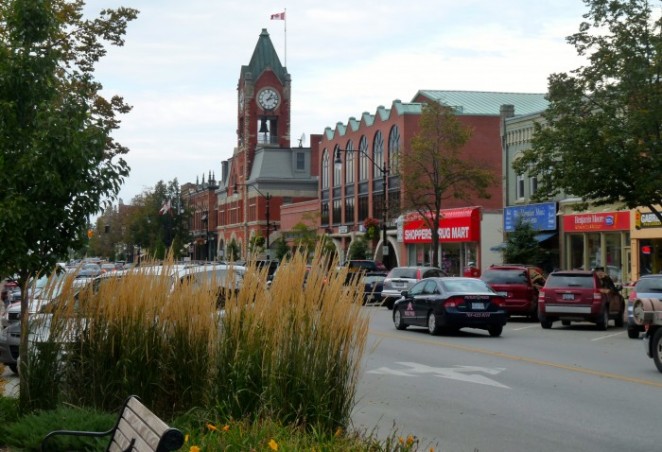
Toronto Real Estate Market Update September 2013

Since June the Toronto residential resale market place has outpaced sales achieved in the same month in 2012. September was no exception. September’s performance was very strong. 7,411 sales were reported for the month, far out-distancing the 5,687 sales reported in September 2012. This represents a 30 per cent increase. August’s increase, compared to August 2012, was 22 per cent.

These strong numbers are no doubt being driven by consumer concern over increasing mortgage interest rates. In the last few months rates have increased by more than 30 per cent. The fear is that rates will continue to rise throughout 2013 and into 2014. The strong performance by the Toronto area market place in part is an indication of buyers making buying decisions today that would otherwise have been made in 2014.

All property types showed very strong agains compared to the same period in 2012. In the City of Toronto detached home sales were up by 31.7 per cent, semi-detached by 13.3 per cent, townhomes by 18.3 per cent, and condominium apartments by 31.5 per cent. Similar data emerges from the 905 trading area.

It is not surprising that the average sale price continued to rise in September. The average sale price for all properties sold in the greater Toronto area was $533,797, an increase of 6.5 per cent compared to September 2012’s average sale price of $501,326. In the City of Toronto the average sale price was even higher, coming in at $571,410. Last year it was $547,901. Detached and semi-detached homes in the City of Toronto are the most expensive housing types. The average price for a detached house was $856,169 in September. Semi-detached homes were less expensive, but still pricey at $616,049. It is not surprising to see buyers rushing to take advantage of still low interest rates. Five year fixed mortgages are still available at 3.69 per cent, and in some instances as low as 3.59 per cent. The most expensive homes in Toronto are detached properties located in the central core of the city. The average price for a detached home in the central core was $1,397,683. Last September the same property sold for $1,224,940, an increase of more than 14 per cent.

Not only were a lot of sales achieved in September at higher average sale prices, but properties sold in very fast order. All properties (on average) that came to market in September in the entire greater Toronto area sold in 27 days, 2 day faster than last year. The speed of sales was even faster depending on housing type and location. Detached homes coming to market in September in the City of Toronto sold in 22 days. Semi-detached homes sold in an eye-popping 14 days. In Toronto’s central core they sold in only 11 days. This pace verges on frenzy. Only condominium apartment sales lagged behind other housing types. Condominium apartments took 36 days to sell, more than 30 per cent longer than the overall market pace. This pace is identical to the rate at which condominium apartments sold in September 2012.

Luxury home sales (properties having a sale price of $1 million or more) showed a marked improvement in September. In this price category 473 properties were reported sold. Of these properties 71 enjoyed a sale price in excess of $2 million. Last year only 343 luxury homes were reported sold in September, similar to the 334 reported sold in September 2011. Compared to last year luxury home sales increased by 38 per cent.

Unfortunately new housing product coming to market did not keep pace with sales. In September 14,938 new listings became available for sale, a decline of 1.3 per cent compared to last year. As a result of this decline, and compounded with the 7,411 sales that took place, active listings heading into October declined to 20,194. Last year there were 21,621, a decline of 6.6 per cent. These declines will only make buying conditions tighter, resulting in multiple bids for many properties that come to market in October.

Condominium apartment sales continue to surprise. Sales were up by 31.5 per cent compared to last year. However, unlike the overall market, average sale prices for the condominium apartments that sold declined by 3.7 per cent in the City of Toronto. It would appear that although sales numbers are up, the condominium apartments that sold were the least expensive units available to buyers. The average sale price for all condominium apartment properties was $363,149.

Looking forward market conditions are likely to remain unchanged in October and likely into November. Sales of properties in the greater Toronto area to date total 68,907. At the market’s current pace sales for the year should total about 86,000 properties. Slightly more than the 85,498 that sold in 2012.

Prepared by: Chris Kapches, President & CEO Chestnut Park Real Estate Limited, Brokerage

Collingwood Real Estate Market Update

After a brief pause in August which registered steady but not breathtaking sales, the Georgian Triangle real estate market appears to have rallied to the pace-setting groove to which it has apparently become accustomed this season, recording more sales for the month of September than any year since 2005. Some of these sales may have been spurred by the recent increase in fixed term borrowing rates and the prospect of further tightening in the lending regime, prompting some buyers to get off the fence and commit to purchasing. But rather than being a temporary and anomalous blip September’s numbers appear to be part of a broader phenomenon attributable to the Georgian Triangle real estate market being on firm ground and benefitting from the ongoing comparative value, attractiveness and affordability of property available for sale in the area. September’s results therefore build upon this year’s strong performance to date, suggesting that the Georgian Triangle is well positioned to move into the final quarter of 2013 with sustainable growth and healthy sales.


According to the Georgian Triangle Association of REALTORS® (“GTAR”) MLS® Statistic Report for September, 203 properties were sold logging a 28% increase over the 158 sales recorded in September of last year, and 15% more than the 176 sold in September 2011. While the surge in property sales was particularly concentrated in the $100-149,999, $250-349,999 and $600-699,999 ranges the strength of the market was generally felt across the board. In fact sales figures for this September were either better or equal to those for September of last year in every price category but one ($240-249,999). This month’s numbers bring year to date sales to 1644, 8% ahead of last year at this time when 1517 were recorded, and almost 16% ahead of the year previous when there were 1410 sales by the end of September. Total dollar volume for the month increased at an even higher level beating out last year’s performance by 35%, and updated year to date figures to reflect a 10% bump over last year.


New listings were up by 3% with 545 properties coming onto the market in September compared to 529 last year, bringing year to date figures to 5168, 3% behind last year’s total of 5316 at this time. With the disproportionately robust sales pace, however, inventory was down 3.5% from last year with only 2388 active listings recorded at the time that GTAR’s report was created, compared to 2476 last September, and even fewer than the 2501 active listings recorded at this time two years ago.


Not surprisingly, with sales outstripping supply, the average residential sales price year to date is almost 5.5% higher than last year coming in at $332,619 compared to $315,436 last year. The average sale price for single family residential properties for the month of September was $332,830, 3.5% more than the $321,501 average sale price last September. Measured over a twelve month period, the average sale price for this property type is up 6% year over year ($334,529 compared to $315,334) highlighting the steady price increases that have been racked up over the last year.


All in all prospects are good for a healthy fall market. Comparatively speaking, the Georgian Triangle continues to be well placed to weather changing economic conditions, including some variation in the lending environment. Given the tight market and fundamentals which support an optimistic forecast for property sales in the Georgian Triangle as we move into the final quarter of 2013, sellers contemplating putting their properties on the market would be well advised to do so, keeping in mind of course the old adage that pricing should reflect value in the property.


Prepared by Richard Stewart, VP and Legal Counsel Chestnut Park Real Estate Limited, Brokerage


Buy or Sell First?

Good question. Unfortunately, like with many good questions, there is no one clear answer. The answer really is: it depends. It depends on your personal preference, the type of home you are selling, the type of home you are buying and the current market conditions.

Option 1) Selling first (preferably with a long closing) and then buying, mitigates the risk of carrying two properties at the same time. But putting your home up for sale before having found your new home can provide uncertainty. What if you cannot find a home you like? If you are looking for an unusual home, this is not practical and you may find yourself leasing in the interim.

However, if you are clear on the type of home, the neighborhood, the price AND you find several places that meet your criteria, then putting your home up for sale first may be your option.

Option 2) Buying first, especially if you are looking for a unique property, can make the most sense. But keep in mind, if you are unable to sell your existing home within the closing period, you may be left carrying the cost of two properties. Bridge financing is available, but the term may be limited.

This option ensures you buy the home you love, but keep in mind, a unique property will be in high demand, so buying conditionally on the sale of your home may not be an option. Are you willing to buy firm (no conditions)?

As you can see, there is merit to both options. You may even find yourself selling first this time and buying first next time. Really…it just depends…

Pricing in Toronto’s Real Estate Market

When preparing to put your home on the market, the goal is (quiet obviously) to get the highest price possible. Perhaps you’ve owned your property for decades, perhaps you’ve invested time and money in improvements like interior updates, additions, or landscaping. Presumably, all the care and attention you have shown your home will be rolled into the cost value in your mind. And while this is all completely reasonable, it is advisable to avoid overpricing your home above all else when putting it up for sale.

Many home sellers reason that they’d like to set the price barrier high and negotiate down from there, but this can be a dangerous move that could cost you some great sale opportunities. Interest in your home will be at its highest when the property is first released on the market (generally within the first week). Home buyers who are serious purchasers will be ready to pounce on new inventory that is well-priced, which could lead to a swift transaction. If the list price of your home is set too high, home buyers and their agents could be discouraged to view it. Later on, as the home sits on the market, you may be required to reduce the price below value in order to drum up new interest.

Remember, the value of your home is determined by what the current market will bear; not what you paid for it originally, or how much you’ve invested in updates. Setting a fair price will attract serious buyers, and if you’re lucky, drum up enough interest for multiple offers.

Courtesy of Chestnut Park Real Estate Limited, Brokerage Blog

The Seller Wants to Change the Closing Date?

Your deal is done, buyer and seller have agreed to all terms, the down payment has been made, and the moving date is set. But your seller gets in touch requesting to change the closing date. What now?

The good news for you is that whether they want to move the date up, or push it back, the final decision is entirely yours. You’ve signed a legal document contingent on the agreed upon closing date and it is up to you how flexible you can or would like to be.

The closing date of your home sale is not an arbitrary thing. The many moving parts of a real estate transaction rely heavily on this date, the adjustment of which can have a domino effect on things such as booking movers, the selling and closing of a previous home, personal timelines like holidays or the first day of the school year, and many more.

Whether it is the seller or buyer requesting the change in closing date, the other party MUST agree to the proposed date adjustment for it to go through. If both parties cannot come together on a new date, the seller in this case must honour the original closing and make arrangements to be out on that day.

If a seller suggests a possible closing date change and you are open to the idea, but you’d like to be compensated for the inconvenience, that is something that can be negotiated through your real estate lawyer and your agent. Depending on how close to the original date the seller would like to reschedule the closing, the upset in your sale might be minimal and therefore easier to accommodate.

Courtesy of the Chestnut Park Blog

Toronto Real Estate Market Update May 2013

The month of May produced statistics that continued the string of strong resale activity in the Toronto market place. Notwithstanding that May of this year did not exceed last May’s sales results, in historical terms May 2013 was an outstanding month. May of last year was the pinnacle of the 2012 market. Following May, and especially after the introduction of the more restrictive lending practices by the Federal Minister of Finance, the Toronto real estate market softened, and remained soft for the remainder of 2012.

In May the Toronto Real Estate Board reported 10,182 residential sales. This compares very favourably with the 10,544 properties that were reported sold in May 2012. This represents a mere 3.4 percent decline. As reported in previous up dates the market is not uniform, with some sectors outperforming others.

Up until May, the high end market was lagging, as compared to last year. This May the high end market ($1 million and higher) has made a resurgence. This May 702 properties in this category were reported sold. This compares with 668 that were reported sold in 2012, an increase of 5 percent. At the very high end ($2 million or more) 120 property sales took place, an increase of 20 percent compared to the 100 properties in this category that sold last year. Until this month high end buyers appeared hesitant to enter the market. Their perception of value and the exorbitant and offensive combined land transfer tax no doubt were responsible for the hesitation. It is too early to tell if this resurgence is due to reduced asking prices or pent up demand, or both.

At the other end of the market, the condominium apartment sector continues to underperform, but not nearly as poorly as has been forecast. Last year 1,632 condominium apartments in the City of Toronto sold. This year 1,499 were reported sold, a decline of 8 percent. The decline was more dramatic in the 905 region, with sales down by 16 percent. Despite these declines, averages sale prices remained strong. Average sale prices for condominium apartments in the 416 region increased 1.2 percent to $372,768, and even in the 905 region, where sales were very slow compared to last year, prices moderately increased by 0.9 percent.

The total number of active condominium apartment listings is also not unfolding as forecast. In May in the City of Toronto there were 5,003 active listings. This compares very favourably to the 4,930 that were available in May 2012, an increase of only 1 percent. If the average sale price for all property types continues to rise, condominium apartments, being the least expensive housing form in Toronto, could see a resurgence, particularly if the available listing base stays low.

At the end of May there were 22,677 active listings. This represents a 10.8 percent increase compared to the 20,462 residential resale properties available for sale in 2012. This number of available properties represents 2.8 months of inventory. In May of last year there was only 2.2 months of inventory. Notwithstanding this increase in supply, the available inventory remains historically low, and still in the range of a seller’s market. In the City of Toronto (416 region) the available supply is slightly higher, coming in at 2.9 months of inventory. The eastern trading areas remain the most active with only 2.2 months of inventory with sale prices on average exceeding the asking price, in some districts coming in with a sale to list ratio of 103 percent.

Sales in May continued at a very brisk pace. In the greater Toronto area all properties sold in 23 days. In the City of Toronto sales were achieved even quicker, in 22 days. As has been the case, sales in the eastern districts took place at a blistering pace, taking only 18 days for all properties on average to sell. The condominium apartment market remains the slowest. In the greater Toronto area all sales were achieved in 32 days. The same sector in the City of Toronto was faster, all sales occurring in only 30 days, another sign that the condominium apartment market is healthier than forecast.

It is not surprising that the average sale price continues to rise. Over 10,000 sales on average taking place in only 23 days will put pressure on prices. In May the average sale price for all properties sold came in at $542,174. This is a 5.4 percent increase compared to the average sale price of $514,567 achieved in 2012. Average prices in the City of Toronto continue to rise as well. A typical home in the City (416) now costs $600,791. The most expensive properties in Toronto are detached homes in Toronto’s central districts. The average price for properties in these districts is $1,335,879, and they all sold in only 19 days.

Going forward I anticipate that the market will slightly moderate, but not to the extent that it did in the second half of 2012. Rising inventory levels should ease the pressure on buyers, enabling them to purchase properties other than in competitive situations. Ultimately rising average sale prices will make some of Toronto’s real estate unaffordable, resulting in some moderation of sale prices. This scenario is likely to play out as we head into the last part of 2013. Over the next few months I anticipate a strong market, with month end data showing positive variances compared to the same month last year.


Prepared by: Chris Kapches, Senior Vice President and Legal Counsel Chestnut Park Real Estate Limited, Brokerage

Collingwood Real Estate Market Update Spring 2013

The Georgian Triangle property market continues to fire on all cylinders racking up yet another impressive performance for the month of April and standing out as one of the beacons of strength and stability in the Ontario real estate market. Indeed April’s sales figures released by the Georgian Triangle Association of REALTORS® (“GTAR”) logged a whopping 213 properties sold, higher than any number recorded for the month of April according to GTAR’s archives over the last decade.  To surpass the level of sales set last year in strong and stable market conditions is truly a notable accomplishment. Affordability, quality of life, diversity of property choices and options, and comparative value all seem to be factors contributing to the ongoing strength and legs of the Georgian Triangle real estate market.

In April, 213 properties changed hands, 4% more than last year in the same month which had 205 sales, and almost 29% more than sold last month and in April 2011, when 167 properties sold in each case. Year to date figures are 2% ahead of last year with a total so far for 2013 of 620 properties sold compared to 608 last year at this time. This number also exceeds all year to date sales figures for this time going all the way back to 2004 when 630 properties were recorded as sold by April’s month end. These are truly impressive figures underlying the resilience of the Georgian Triangle market and the obvious attractiveness of this area to today’s buyers.

Interestingly, however, total dollar volume of sales is down year over year by 4%, highlighting the fact that while the market may be robust, sales appear to be concentrated more at the mid and lower price ranges, reflecting the activity in neighbouring rural and urban trading areas where high end properties are not moving as quickly, and when they do sell, it is often only after one or more price reductions. Affordability and real value appears to be top of mind for most buyers who are not prepared to pay any price for their next home or investment and rather in many cases settle on a price only after serious and tough negotiations with the seller. Consistent with this, sales in the one million dollar and up range for the month of April lag behind last year at this time while unit sales in most price categories between $250,000 and $800,000 exceed those from the year previous.

Listings are down 6% from last year with only 706 new properties coming onto the market in April compared to 755 in April 2012. Year to date figures are not much different coming in at 2268, 5% behind last year’s tally of 2383. All this contributes to a tighter market, reflected in the lower inventory of active listings which is 4% lower than last year with 2226 properties recorded as active listings in the MLS® system at the time GTAR’s report was created compared to 2320 last April.

Not surprisingly, strong demand with tighter supply means higher prices, though admittedly only modestly so. Year to date the average residential sale price is up 4.3% coming in at $331,267 compared to $317,534 last year at this time. The average sale price for single family residential properties this April was $318,706, 1% more than last April when it was calculated at $315,336. Measured over a longer twelve month period, the numbers are relatively consistent, stable and sustainable marking only a 1.3% increase coming in at $325,023 compared to $320,755 measured over the same length of time the year previous.

All things considered, GTAR’s statistics for the month of April reflect a remarkably positive performance for the Georgian Triangle real estate market, if somewhat qualified by a softer higher end. That said, mixed messages on the economic front both domestically and south of the border, to say nothing of the ongoing instability in global financial and labour markets means that some degree of uncertainty will continue to percolate through to buyers’ intentions and their willingness to part with their money. As stated in earlier reports, sellers will have to keep this in mind in tempering their expectations and ensuring that their list price reflects value.


Prepared by: Richard Stewart, VP and Legal Counsel Chestnut Park Real Estate Limited, Brokerage


Feature image via The Picot Team, Chestnut Park Real Estate Collingwood