
Archives

Tagged ‘toronto market update‘

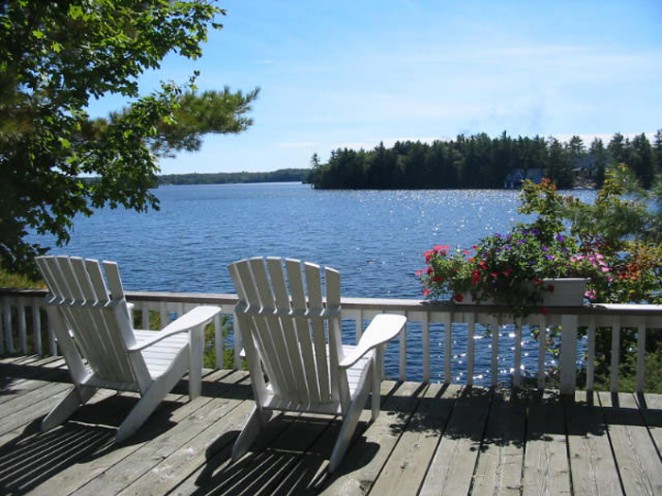
Muskoka Real Estate Market Update Spring 2013

The Muskoka real estate market started the first third of the year in a slower gear than it did during the same period in 2012. This was true for the entire recreational marketplace, including Haliburton Highlands (where Chestnut Park now has a presence), Lake of Bays and the Muskoka Lakes. At this stage the explanation for this slower market pace is two fold. Early data indicates that substantially fewer properties have been listed for sale by sellers. Less inventory means fewer sales.

The explanation for the decline in available recreational properties for sale is due to weather conditions. The 2012 winter was extremely mild. Access was made easy, and the warm conditions in March and April resulted in numerous sellers listing their properties early in order to take advantage of conditions that were conducive to spring viewings and sales. The winter and early spring of 2013 have been the polar opposite of 2012. Substantial amounts of snow made access difficult, and weather conditions were anything but conducive to cottage viewings. In April the region experienced severe flooding, with many boathouses, and in some cases cottages, submerged in water. Even as this report is being prepared (early May) the lingering effects of the flooding in the region are still negatively impacting the recreational resale market.

In the first third of 2013 overall recreational sales as reported by the Muskoka, Haliburton, and Orillia Board were off by 26 percent. In 2012 130 sales had been reported, whereas only 93 were reported this year. Sales on the Muskoka Lakes, Lake of Bays, and in the Haliburton Highlands were all off by 20 percent. On the Muskoka Lakes from 25 to 18 sales, 20 to 16 on Lake of Bays, and 35 to 28 in the Haliburton Highlands.

Although the correlation to inventory levels is not identical, the connection between lower sales and available properties for sale is quite apparent. Total active listings at the end of April for the region were down by 20 percent, from 1027 in 2012 to 822 in the first third of this year. The Muskoka Lakes have seen a 17 percent drop in inventory from 240 available properties to 199. Lake of Bays shows only a 6.3 percent decline, from 110 to 103, with the highest decline in the Haliburton Highlands, from 295 to 231 available properties, a drop of 21.5 percent.

The first part of the year for recreational markets is not an accurate barometer of how the market will perform throughout the remainder of the year. There is no doubt that the pace of sales will increase, however, the assessment of the market at the end of 2012 continues to apply. The softening of sales throughout Canada, and in particular in the major metropolitan areas like Toronto and Vancouver will have an impact on recreational property sales. High-end property sales in Toronto have experienced a substantial decline. Although not all the factors impacting high-end property sales in Toronto apply to Muskoka and the region (i.e. the double land transfer tax) buyer resistance to real or perceived inflated prices will be the norm in 2013.

As was indicated in the year-end market report, the key to sales is pricing. Recreational properties represent discretionary purchases. In times of instability, that is broader markets that are showing some weakness, discretionary purchases, not driven by need, cause buyers to sharpen their pencils, ensuring that there is value to their purchases. Realistic pricing will always overcome the broader economic considerations that may be negatively influencing buyers.


Prepared by: Chris Kapches, Senior Vice President and Legal Counsel Chestnut Park Real Estate Limited, Brokerage

Toronto Real Estate Market Update April 2013

By any standards other than a comparison to April 2012, the Toronto residential resale market performed brilliantly this month. April 2012 was one of a string of months in the early part of last year that were on track to achieve record-breaking statistics. April 2013 will unfortunately be compared to last year, particularly by journalists, who only see the decline year-over-year, and not the absolute numbers achieved.

In April, 9,811 residential resale properties were reported sold. This is only a 2 percent decline compared to the 10,021 properties reported sold last year. As has been the case throughout 2013, the market remains disjointed with sales of various property types in various trading districts selling at practically light speed, with other property types finding some market resistance.

All properties in the greater Toronto area sold in only 23 days (on average). This is faster than the 24 days that sales took place in March. In February it took 28 days for properties to sell. The pace of sales, as well as the volume, has been accelerating as the year has progressed. In some trading districts the pace of sales was astounding. For example, all semi-detached properties in the eastern trading districts sold in a mere 10 days. All detached homes sold in only 15 days. Even in Toronto’s most expensive central districts all properties sold very quickly. Semi-detached houses sold in 16 days, and detached homes, which had an average sale price of $817,649, in only 18 days.

The drag on the market was the condominium apartment sector. In central Toronto, where more than 60 percent of all condominium apartments for sale are located, it took 31 days for sales to take place. Condominium apartments accounted for more than 30 percent of the entire greater Toronto inventory of properties available for sale in April.

Overall inventory levels are increasing as new listings come to market. In April 18,270 new listings were placed on the market by sellers, an increase of 10.9 percent over the 16,470 that became available last year. At the beginning of May there were 20,866 homes for sale in the greater Toronto area, an increase of 13.5 percent compared to 2012. There are now 2.9 months of inventory in the City of Toronto. Last year at this time inventory levels were at 2.2 months. Expect inventory levels to increase as the year unfolds. An increase in inventory levels may not impact the number or speed of sales, but it will definitely impact average sale prices, as we saw in April.

In April the average sale price increased to $526,335, one of the lowest year-over-year increases this year. April’s average sale price was only 2 percent more than the $515,888 achieved in 2012. This moderate average sale price increase was no doubt impacted by the still sluggish high-end market. In April 606 properties having a sale price of $1 Million or more were reported sold. In 2012 643 were sold, a decline of 6 percent.

A bright spot in the market was the increase in the average sale price for condominium apartments. Since condominium apartments account for such a large portion of the overall market, a decline in average sale prices will be negatively felt throughout the market. In April, however, the average sale price for condominium apartments in Toronto increased by 5.6 percent to $379,266. Unfortunately there was a 5.9 percent decline in the 905 region, but that marketplace accounts for much fewer sales than the City of Toronto.

The number of condominium apartment listings is higher than in 2012, but not the volume that was forecast. In April there were 4,755 condominium apartments for sale in Toronto (with 1,990 apartments in the 905 region). This is only an 8 percent increase compared to the same period in 2012. In the central districts, where most condominium apartments are to be found, there were 3,045 apartments available for sale. Last year there were 2,608, an increase of 17 percent year-over-year. 17 percent is not substantially higher than the 13.5 percent increase in listings in the greater Toronto area marketplace for all property types.

April finished strong, and there are no economic factors that would cause May to be any less active. Last May 10,545 properties were reported sold. That represented the peak of sales in 2012. Following May sales began to decline throughout the remainder of 2012. This year the opposite should occur with sales remaining strong, posting positive variances compared to 2012 to the end of the year.

Prepared by: Chris Kapches, Senior Vice President and Legal Counsel Chestnut Park properties in the Toronto area

Toronto Real Estate Market Report Spring 2013

There was a pronounced resemblance between the performance of the Toronto residential resale market in February and in March. In February sales were off by 15 percent compared to February of last year, while average sale prices rose moderately by 2.1 percent. Upon deeper review it became obvious that the market was fractured, with some sectors being very active, in some cases frenetic, while others lagged.

We see more of the same in March. March sales were off by 17 percent compared to March of 2012. Notwithstanding this decline in sales, average sale prices for all properties sold in the greater Toronto area rose by 3.8 percent. The Toronto Real Estate Board reported 7,765 properties sold in March. In 2012, 9,385 properties were reported sold. As in February, those properties that were sold were sold in almost record time, at speeds consistent with a strong seller’s market. In February all sales took place in 28 days. In March the pace of sales increased by almost 17 percent to 24 days. The pace of sales is inconsistent with declining sales.

The explanation for this inconsistency is to be found in the performance of the various Toronto market sectors. Properties coming to market with price points ranging from $300,000 to under $1,500,000 sold quickly, and for the most part in excess of the asking prices. For example, it was not uncommon for trading areas in the west and eastern districts of Toronto to report average sale prices (for the entire district) that exceeded the asking price. This phenomenon was less prominent in the central districts where house prices remain the most expensive in Toronto. In the central districts the average sale price for detached houses came in at $1,302,359 while semi-detached homes sold for $771,232, approximately $250,000more than semi-detached homes in the west and eastern trading areas.

The pace and the number of sales in the high end of the market and in the condominium apartment sectors continue to be a drag on the overall market. There were 11 percent few high-end properties ($1 Million or more) sold in March of 2013 compared to the same month last year. It should be noted that is a promising improvement compared to February’s results. In February the high end sector was off by 18 percent. The improvement was more dramatic for properties having sale prices in excess of $2Million. In February that marketplace was off by 27 percent. InMarch, the decline was only 7.6 percent compared to March 2012. In actual numbers, March saw 462 reported sales having a value of $1 Million or more (521 in 2012) and 72 having a value of $2 Million or more (78 in 2012).

The condominium apartment sector continues to lag.Whereas the overall market (including condominium apartments) saw all sales take place in 24 days (on average) in Toronto it took condominium apartments 32 days to sell, 33 percent longer. Central Toronto was slightly more robust with sales taking place in 30 days. Last year sales took place in 28 and 26 days, respectively. By comparison, detached and semi-detached homes in March were selling in less than 24 days and as quickly as 12 days in some trading areas (the eastern districts).

There are two aspects of the condominium apartment market that were encouraging in March. Firstly, average sale prices for condominium apartments actually increased by 2 percent compared to last year to $367,595. Secondly, the market is not being overwhelmed by inventory. In the city of Toronto there were 4,330 condominium apartment listings. This is only 8 percent higher than the number of listings on the market in 2012. In this regard the central districts, where the highest concentration of condominium apartments is to be found, did not fare as well. There condominium apartment inventories increased by 39 percent, from 1956 units for sale in 2012 to 2,733 in March of this year. It was also encouraging to see that in some trading areas sale prices of reported condominium sales were equal to or exceeded the asking price.

Going forward,April will no doubtmirror the performances of February andMarch. Some sectors of themarket will be extraordinarily strong, while condominium apartment sales, and less so high-end property sales, will be a drag on the market. At this time there is nothing in the economic forecast nor is there any likelihood that there will be any changes to the stricter mortgage lending requirements that would cause the market will move to a higher gear.

Prepared by Chris Kapches

Toronto Real Estate Market Update Winter 2012-2013

The Toronto residential resale market provided some intriguing data for the month of February. Looked at as a whole it would appear that it is undergoing a negative shift, the continuation of a trend that started in the second half of 2012 and has continued into this year. On closer inspection we see a fragmented market, with some sectors as robust as the record breaking pace of early 2012, and others clearly lagging, dragging the overall performance of the market into negative variance territory.

In February, 5,759 properties were reported sold. In 2012, 6,809 properties were reported sold by the Toronto Real Estate Board, a decrease of more than 15 per cent. Notwithstanding the decline in sales compared to last year, the average sale price increased, but more moderately than recent months. Last February the average sale price came in at $500,249. This year it increased to $510,580, an increase of 2.1 percent. Increases over the past few months have been in the 5 to 7 percent range.

Interestingly enough, the sales that were recorded took place at a pace normally associated with very robust markets. In February all reported sales took place in 28 days (on average) after they were listed. Any time the average days on market is less than 30 days it reflects a seller’s market, which is ironic in light of the fact that compared to last year, the market was off by more than 15 percent.

Last year, when the market was on pace to smash all previous records for sales, the average days on market was 24 days. A deeper analysis of the market indicates that some sectors and housing types are more robust than others. The high-end, or ‘luxury’ home, market is showing weakness compared to last year. Similarly the condominium apartment market is lagging compared to 2012.

In February 2012, 407 properties having a value of $1 Million or more were reported sold. This year that number declined to 334, a decline of 18 percent. The decline in the very high-end properties, having a value of $2 Million or more, has been even more dramatic. Last year 69 properties in this category were reported sold. That number declined to 50 this year, a decrease of more than 27 percent. This decrease has an obvious impact on the monthly average sale price.

It is difficult to pinpoint why this area of the marketplace is not performing well. One explanation is that buyers can no longer obtain a high ratio mortgage on properties with sale prices in excess of $1 Million. It might also be that the value of high-end properties, particularly with values in excess of $2Million, are no longer supportable. During the robust market between the spring of 2009 and last year, prices of high-end properties were strong. Perhaps they pushed the limits that the market could bear. With a second land transfer tax, purchases in excess of $2 Million become quite onerous. For example the combined provincial and municipal land transfer tax a buyer of a $2.5 Million property pays is an outrageous $92,200.

The other sector that is lagging is the condominium apartment sales. I do not believe, as is often reported in the press, that this is primarily due to an overwhelming increase in inventory. In the Toronto (416) marketplace, sales in February were down by 20 percent. Average sale prices declined by 4.7 percent. On average it took 36 days for a listed condominium apartment to sell, 33 percent longer than all properties in Toronto. Detached and semi-detached homes in Toronto sold very quickly, as low as 15 days in Toronto east end districts to 20 days in Toronto’s central districts. In comparison, condominium apartment sales are at best tepid.

Condominium apartment inventory has not increased dramatically compared to last year. The total number of condominium apartments available for sale in the Greater TorontoArea (416 and 905) was 5,458. Last year there were 5,066, an increase of slightly more than 8 percent. In the city, where the bulk of condominium apartments is to be found, the increase is less dramatic. Last year there were 3,712 available for sale. In February of this year there were 3,785, an increase of a mere 73 additional condominium apartments. Considering that sales are off by 20 percent, inventory levels have actually declined. It may be that we will see inventory levels grow as we proceed through the year, but it has not happened yet.

So the reputed cause for the slow down in condominium apartment sales cannot be attributed to higher inventory levels. Rather it is not doubt due to the restrictive mortgage lending rules that the federal government has implemented. Condominium apartments are usually the first and only choice for first time buyers. In the city of Toronto (416), the average sale price in February was only $352,614. There are reports that indicate that 17 percent fewer buyers qualify under the new stricter lending guidelines. A number that is not inconsistent with the 20 percent decline in the condominium apartment market in 2013.


Prepared by: Chris Kapches, Senior Vice-President and Legal Counsel


February 2013


1300 Yonge Street, Suite 100 Toronto, Ontario M4T 1X3 • P: 416.925.9191 • F: 416.925.3935


Toronto Market Update June 2012

Although the sales results for residential resales reported by the Toronto Real Estate Board were down in June as compared to June of 2011, the month’s performance was still strong. As in the case of the previous few months, the number of new listings coming to market continued to increase, prompting some economists to conclude that the sellers’ market that has been in play in Toronto since the latter part of 2009 may be coming to an end. I believe that this prediction maybe premature. It will take a string of months when sales decline and listings continue to increase before the market will convincingly move from a sellers’ to a balanced market.

In June 9,422 residential properties were reported sold. This request is down by more than 13 percent compared to the 10,850 sales reported in May, the most sales reported in any month in 2011. June’s sales were also off by 5.4 percent compared to the 9,959 sales reported in June 2011. This is one of the few months in which sales in the current month did not exceed sales for the same month in the previous year. On a year-to-date basis, 50,778 sales have been reported. This pace, if it continues, will exceed the record year of 2007 when Toronto area Realtors sold 93,193 residential properties.

A trend reported in the last monthly report continued into June. Sales growth continues in the 905 region, while sales are beginning to decline in the 416 marketplace. In June sales of detached houses were down 9 percent in the 416 area, yet up 2 percent in 905. Similarly semi-detached home sales were down 15 percent in the 416 region, while the corresponding housing type in the 905 region was up 7 percent. It is only in the case of condominium apartment sales that the 905 and 416 markets are in lock step. Condominium apartment sales were down 18 percent in the 416 region and 20 percent in the 905 area, the largest drag on the over market.

New listings continued to increase as compared to June of last year. 16,679 new listings came to market, 13 percent more than the 14,755 that came to market last June, but substantially fewer than the 19,177 that came to market in May. Since April 52,292 new listings have come to market. During this same period 30,400 sales have been reported, resulting in an increasing active listing base. At the beginning of July there were 20,583 active listings, 13.7 percent more than the 18,102 properties available for sale in July of 2011. As I have indicated in previous reports, the increasing inventory, if it continues, will shift the balance in the market, resulting in more buyer choice and ultimately moderating price increases.

Not withstanding the increasing inventory levels of residential properties in the Toronto area properties continue to sell at a very brisk pace. In June it took only 22 days for all properties (on average) coming to market to sell. Last year it took 24 days. Although the pace in June was blistering, it was one day less than the 21 days it took all properties to sell in May. Like the months of inventory, the days on market statistics must be keenly observed to see if any moderating patterns are developing.

June’s average sale price declined as compared to Mays. In May the average sale price was $516,350, slightly less than the all time record average sale price of $516,608 established in April of this year. Junes average sale price came in at $508,622, 7.3 percent higher that the $474,223 achieved in June 2011. Junes decline, as compared to April And May, is consistent with cyclical seasonal declines, and does not, therefore indicate that average sale prices are declining. Historically prices begin to decline in June, and continued to decline in July and August.

Central Toronto remains the most expensive place to purchase detached and semi-detached houses. On average a buyer can expect to pay $1,306,000 for a detached house, and $ 700,000 for a semi-detached house. Properties in these categories sold in 19 and 14 days, respectively, notwithstanding their expensive selling prices. The least expensive detached and semi-detached homes can be found in Toronto’s eastern trading districts. On average homes sold for $ 506,370. Buyer’s had to be ready to act quickly. Properties in these categories were often spending less than 10 days on the market before being reported sold.

July will be an interesting month to monitor. If at the end of the months sales for July of this year are less than sales for July 2011, it will be two consecutive months of negative sales variances. Still too early to pronounce that the market has shifted to a balanced market. But clear signs that change is underway If this does not occur, then one can anticipate a brisk market for the remainder of 2012, though less frothy than the first six months of this year. Early indications are that July 2012 will compare well to the performance achieved in July 2011.

Prepared by: Chris Kapches, Senior Vice-President
Chestnut Park Real Estate Ltd., Brokerage

Toronto Real Estate Market Update – May 2012

The Toronto Real Estate Board reported very strong numbers for the month of May. The only change to the market place in May was the number of listings that came to market and the longer term impact that more supply will have on market conditions. Until very recently demand outdistanced supply. We are beginning to see the very first signs of supply catching up to demand.

In May 10,850 residential properties were reported sold. This number represents the most sales reported in any month in 2012. Sales in May of this year exceeded sales as compared to May of last year by 11 percent. There were 9,766 sales reported in 2011. Year-to-date 41,651 residential resale properties have been reported sold. If the current pace of sales continues, sales for 2012 might top the 93,193 sales reported in 2007, the best year in the history of the Toronto and area marketplace.

What is emerging is that sales growth is the strongest in the 905 regions. Sales of detached and semi-detached homes in the City of Toronto are up by 6 percent over last year. In the 905 region sales of similar types of properties are up by 13 and 12 percent respectively. Surprisingly the same is true for condominium apartments. In the City of Toronto sales were up by 5 percent, and 12 percent in the 905 region. In absolute numbers, however, many more condominium apartment sales take place in the City of Toronto (1,632) than in the 905 region (704). There are a number of factors responsible for these variances. Generally property values are less in the 905 region than in the City. There is more supply. There is no additional land transfer tax. In the City of Toronto the municipal land transfer tax adds approximately $6,000 to the averaged priced property.

May saw one of the largest influx of new listings in many months. 19,177 new listings came to market, 20.2 percent more product than the 15,949 new listings in May 2011. Coupled with the 16,436 new listings in April, 35,613 new listings came to market in the last two months. During this same period 20,978 residential properties were reported sold. Approximately 15,000 properties remain unabsorbed heading into June. These 15,000 unabsorbed listings are reflected in the 20,462 active listings at the beginning of June. This is a 10 percent increase compared to the total number of available listings at the beginning of June of last year. If new listings continue to increase at May’s pace, price growth will moderate, as all but the most exceptional properties will take longer to sell. The months of supply data will be the statistic to watch over the coming months.

Given the foregoing it is not surprising that days on market data provided by the Toronto Real Estate Board is at record levels. In May all residential properties that came to market sold in 21 days. Last May it took (on average) 23 days for all properties coming to market to sell. In Toronto’s hot, and less expensive, eastern districts, sales took place in less than 17 days on average, even as low as 9 days in some of the eastern sub markets.

The average sale price in May came off the record average sale price of $517,556 achieved last month. May marked the end of a string of record breaking months. May average sale prices subsided slightly to $516,787, yet still almost 6.5 percent higher than the $485,362 average sale price reported in May of last year. Sales of properties having a sale price of $1 Million or more did establish a new record. In this category of homes, 668 properties were reported sold, eclipsing the record established just last month. In April 643 properties in this category sold. It should be noted that 100 properties had sale prices exceeding $2 Million, also a record.

Central Toronto remains the most expensive location to buy a home in the greater Toronto area. The average price of homes in Toronto at $568,768 is 12 percent more expensive than the averaged price property of $516,787 for the entire greater Toronto area. In central Toronto average prices rose to $681,261, 32 percent more than greater Toronto prices. And this includes condominium apartments. A detached home in central Toronto now costs $1,249,967 (almost identical to April’s price), and a semi-detached home will cost a buyer $766,440. As has been the case throughout 2012 the most accessible properties for buyers are available in Toronto’s eastern districts. The average sale price for all eastern districts in May came in at $439,376, well below the average Toronto resale price of $568,768.

Going forward the key to the way in which the market will evolve is supply. As this report has indicated, May saw one of the largest supply of new listings in years. A continuation of a large number of new listings over the remaining months of 2012 will cause the market to moderate. Prices will level off as buyers have more choice.

Prepared by: Chris Kapches, Senior Vice-President at Chestnut Park Real Estate Ltd., Brokerage